
Understanding Slab Leaks in Livermore Properties
A slab leak occurs when the pressurized water supply pipes buried underneath your home’s concrete slab foundation develop fractures, pinholes, or complete joint splits. In Livermore and the wider Tri-Valley basin, thousands of homes built between the 1960s and 1990s were constructed on monolithic concrete slabs with type M or type L copper plumbing embedded directly in gravel or backfill sand beneath the pour.
When an under slab leak repair Livermore project is delayed, escaping pressurized water saturates the soil. Because Livermore features expansive clay soils that swell dramatically when soaked and shrink during hot, dry summer conditions, this localized saturation causes uneven hydraulic lifting followed by foundation settling, cracked sheetrock, and costly structural movement.
Primary Causes of Foundation Pipe Leaks in Livermore
Several unique local factors make homes in Alameda County especially vulnerable to plumbing failures below the slab:
Expansive Clay Soil Movement
Livermore Valley soils contain high clay fractions that expand in wet months and contract during arid summers. This shifting applies constant lateral stress and shear force against buried copper lines.
Regional Hard Water & Chemistry
Municipal water supplies sourced through regional aquifers and surface reservoirs contain minerals that interact with aging copper pipe interiors, causing pitted corrosion over decades.
Seismic Friction
Minor tectonic adjustments along regional fault lines cause foundational micro-vibrations, wearing down copper where it directly contacts rough aggregate or concrete without protective sleeves.
Thermal Expansion on Hot Lines
Hot water lines expand and contract every time hot water runs, rubbing repeatedly against bedrock or concrete until wall thinning produces a high-pressure fissure.
Warning Signs Checklist: When to Call a Slab Leak Plumber Livermore
Under-slab failures rarely show up as visible surface waterfalls right away. Instead, subtle symptoms give away a leak under foundation Livermore properties experience:
- Warm Spots on Flooring: A warm zone on hardwood, laminate, or tile indicates a hot water line breach beneath the slab.
- Continuous Sound of Running Water: Hearing water hissing or running inside walls or beneath baseboards when all faucets, toilets, and appliances are shut off.
- Unexplained Water Bill Spikes: Livermore municipal utility billing showing sudden thousands of gallons of excess monthly consumption.
- Continuous Meter Dial Movement: The low-flow indicator on your exterior water meter spinning steadily while no fixtures are operating.
- Damp Baseboards or Floor Buckling: Moisture wicking up into baseboards, warping floor planks, or causing damp carpet padding.
- Foundation or Wall Cracks: Hairline fractures expanding along exterior stucco, slab perimeters, or drywall seams.
- Musty Odors or Mildew: Persistent damp smells emanating from closets, laundry spaces, or crawlspaces.
Immediate Actions to Take Before Plumber Arrival
Immediate Emergency Action Guide
- Shut Off the Main Water Valve: Locate your house shutoff valve (usually situated near your front hose bib or inside the garage) and turn it clockwise a quarter-turn (ball valve) or several clockwise turns (gate valve) until water stops.
- Turn Off Water Heater Power / Gas: Switch electric water heater breakers off or set your gas water heater control valve to "Pilot" or "Vacation" to prevent empty tank burner damage.
- Document Signs with Photos: Photograph damp floor areas, your spinning meter face, and any structural cracks for insurance claim verification.
- Call for Expert Evaluation: Contact our team at (888) 205-7875 to schedule rapid electronic detection.
Slab Leak Repair Options: Spot Repair, Reroute, or Repiping
Resolving water leak under slab Livermore issues does not always require breaking up your finished interior floors. Depending on the condition of your plumbing lines, three primary strategies exist:
When a leak occurs on an isolated section of healthy pipe, technicians use precision jackhammers or core drills to open a small, localized floor cavity, excavate the wet sand, cut away the breached copper, and braze a new copper replacement sleeve before testing and backfilling.
Rather than tearing up expensive flooring, the leaking underground pipe is capped off and abandoned forever. A new modern PEX pipe is routed overhead through attic joists or inside wall cavities, reconnecting fixtures cleanly with zero foundation destruction.
For Livermore homes with older copper lines that have experienced multiple pinhole breaches, complete repiping replaces all underground pressurized lines with durable cross-linked polyethylene (PEX) or commercial-grade copper above the slab.
Understanding Slab Leak Repair Cost Livermore Factors
Homeowners frequently inquire about slab leak repair cost Livermore considerations. Because each home’s construction, pipe depth, flooring finish, and leak accessibility differ, reputable contractors evaluate specific factors rather than giving blind quotes over the phone:
- Location & Depth of the Pipe: Leaks situated beneath kitchen cabinetry or structural bearing walls require more complex access than open hallway runs.
- Repair Method Selected: An overhead PEX reroute avoids concrete breaking and floor restoration, while direct foundation excavation requires flooring replacement and concrete patching.
- Condition of the Surrounding System: If the pipe is brittle or severely corroded, single-point repairs risk failing shortly after pressure is restored, making rerouting the more economical long-term option.
- Insurance Coverage Deductibles: Many homeowners policies cover tear-out and water damage restoration while excluding the plumbing pipe itself.
Our Complete Livermore Foundation Plumbing Services
Explore our specialized plumbing services tailored to Livermore’s unique residential infrastructure:
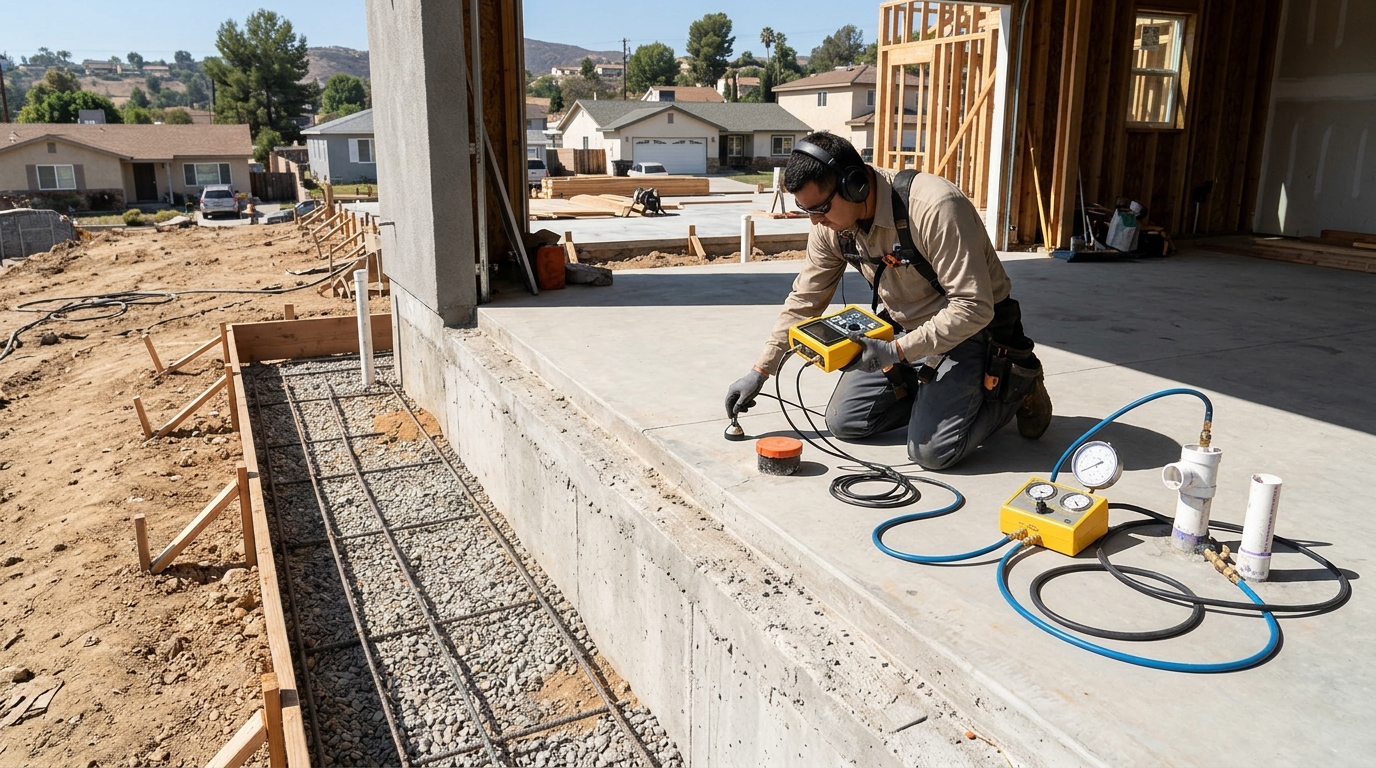
- Slab Leak Detection: Non-invasive acoustic and thermal diagnostics that pinpoint underground leaks without blind floor demolitions.
- Hot Water Slab Leak Repair: Specialized diagnosis for thermal floor spots, continuously firing water heaters, and high gas utility expenses.
- Slab Leak Reroute: Non-destructive overhead pipe bypasses running through attics and interior drywall channels.
- Whole-House Repiping: Full replacement of degrading copper or polybutylene plumbing with flexible, scale-resistant PEX-a.
- Water Leak Detection: Locating hidden leaks in walls, ceilings, fixtures, and exterior yard water service lines.
- Pinhole Leak Repair: Halting the repeated cycle of corrosive pitting across copper domestic water lines.
- Slab Leak Insurance Help: Comprehensive inspection reports, moisture mapping, and contractor estimates for insurance adjusters.
Frequently Asked Questions About Slab Leak Repair
How do you know if you have a slab leak or a regular plumbing leak?
Regular plumbing leaks typically show up around visible fixtures, beneath sinks, or on upper-level ceilings. A slab leak occurs beneath the ground floor concrete foundation, often producing warm flooring, spinning water meters when taps are closed, damp baseboard edges, or the muffled sound of running water under the floorboards.
Will homeowners insurance cover slab leak repairs in Livermore?
Most standard California homeowners insurance policies cover the "tear out" cost to access the leak and the water damage restoration to drywall and flooring, while the actual plumbing repair itself is usually homeowner responsibility. Detailed diagnostic reports help streamline the claims process.
Can I live in my home during a slab leak repair?
Yes, in the vast majority of cases. If an overhead reroute is performed, water service is typically shut off only during work hours and restored in the evening. Spot repairs through concrete may take 1 to 2 days, during which temporary water bypasses can often be set up.