
Why Hot Water Slab Lines Fail First in Livermore Homes
In residential concrete slab construction across Livermore, underground hot water supply lines fail at a rate nearly four times higher than cold water lines. When hot water flows through copper tubing, the metal heats up rapidly and expands along its length. When the flow stops, the copper cools and contracts back to its resting state.
Over decades of continuous thermal cycling, this physical movement causes the copper pipe to rub relentlessly against coarse aggregate, sharp gravel, or rigid concrete in the slab bed. Eventually, mechanical abrasion wears the outer pipe wall down until pressurized hot water bursts through, creating a significant hot water line leak under slab Livermore properties encounter. If left unchecked, this water can destabilize soil and require extensive slab leak repair in Livermore.
Common Symptoms of a Hot Water Slab Breach
Unlike cold-side leaks which often go undetected until a meter reading arrives, hot water leaks produce distinctive thermal and mechanical symptoms:
- Warm Spot on Floor Livermore: Noticeably hot or warm sections on hallway tile, kitchen linoleum, wood flooring, or carpeting. In some cases, pets will instinctively sleep on these heated patches.
- Water Heater Running Constantly Livermore: The gas burner or electric heating elements remain active 24/7 because heated water is continually draining into the ground beneath your home.
- Excessive Energy Utility Bills: Your PG&E gas or electric bills spike sharply due to non-stop water heating cycles.
- Depleted Hot Water Supply: Showers and faucets turn lukewarm or run out of hot water rapidly because the water heater tank cannot keep pace with underground leakage.
- Hissing Sound Near Water Heater: Constant fluid flow or pressure relief valve dripping caused by non-stop operation.
Thermal Infrared Imaging for Accurate Pinpointing
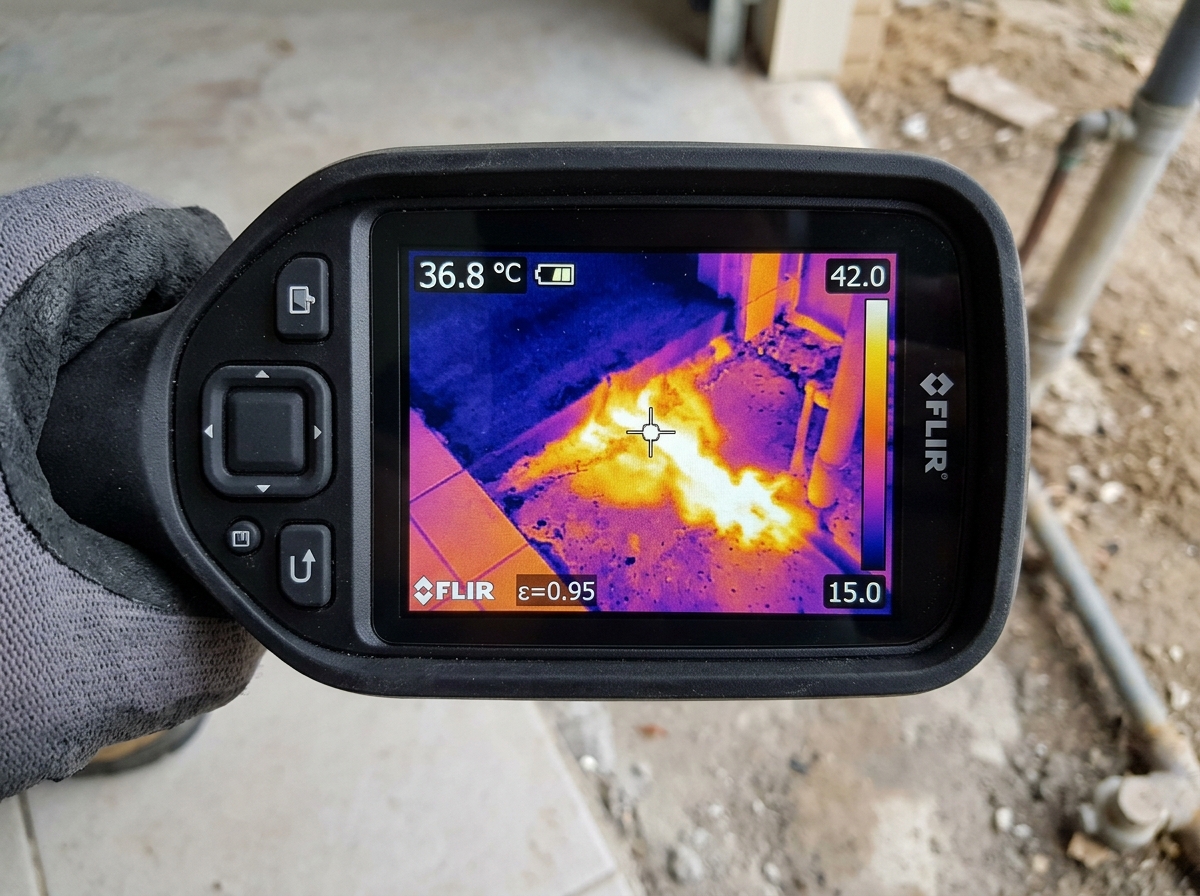
Because escaping hot water radiates thermal energy through concrete, high-resolution infrared cameras provide an invaluable diagnostic advantage. Our technicians inspect the flooring surface with FLIR thermal imaging technology.
The thermal scan reveals a vivid heat bloom that tracks the underground hot water trajectory directly to the epicenter of the pipe fracture. Combined with electronic acoustic verification from our slab leak detection equipment, we pinpoint the exact break with zero preliminary flooring demolition.
Repair vs. Reroute for Hot Water Slab Leaks
When dealing with a compromised hot water line beneath concrete, homeowners typically choose between two primary repair strategies:
Direct Foundation Spot Repair
A localized opening is made through the concrete slab right at the leak location. The broken section is excavated, cut out, and replaced with heavy-duty Type L copper and silver-brazed fittings. This method works well if the remaining sub-slab pipe is structurally sound and the leak is situated in an easily accessible area like an unfinished closet.
Overhead Hot-Line Rerouting
Rather than opening concrete, the leaking sub-slab line is disconnected and abandoned entirely. A new commercial-grade PEX-a line is routed through the attic or interior wall cavities from the water heater manifold to the affected plumbing fixture. This eliminates concrete breaking and permanently removes hot water pipes from underground friction. Learn more about a slab leak reroute.
Protecting Your Water Heater After an Underground Leak
Continuous firing during a hot water slab leak subjects your water heater to severe operational strain. Sediment buildup accelerates, burner components overheat, and thermal stress shortens equipment lifespan. During our service visit, we inspect your water heater's pressure relief valve, thermostat controls, and tank condition to ensure your entire hot water system operates safely once repairs are finalized.
If your home has experienced multiple copper failures across multiple rooms, a more permanent option like whole-house repiping may provide the lowest long-term cost.