
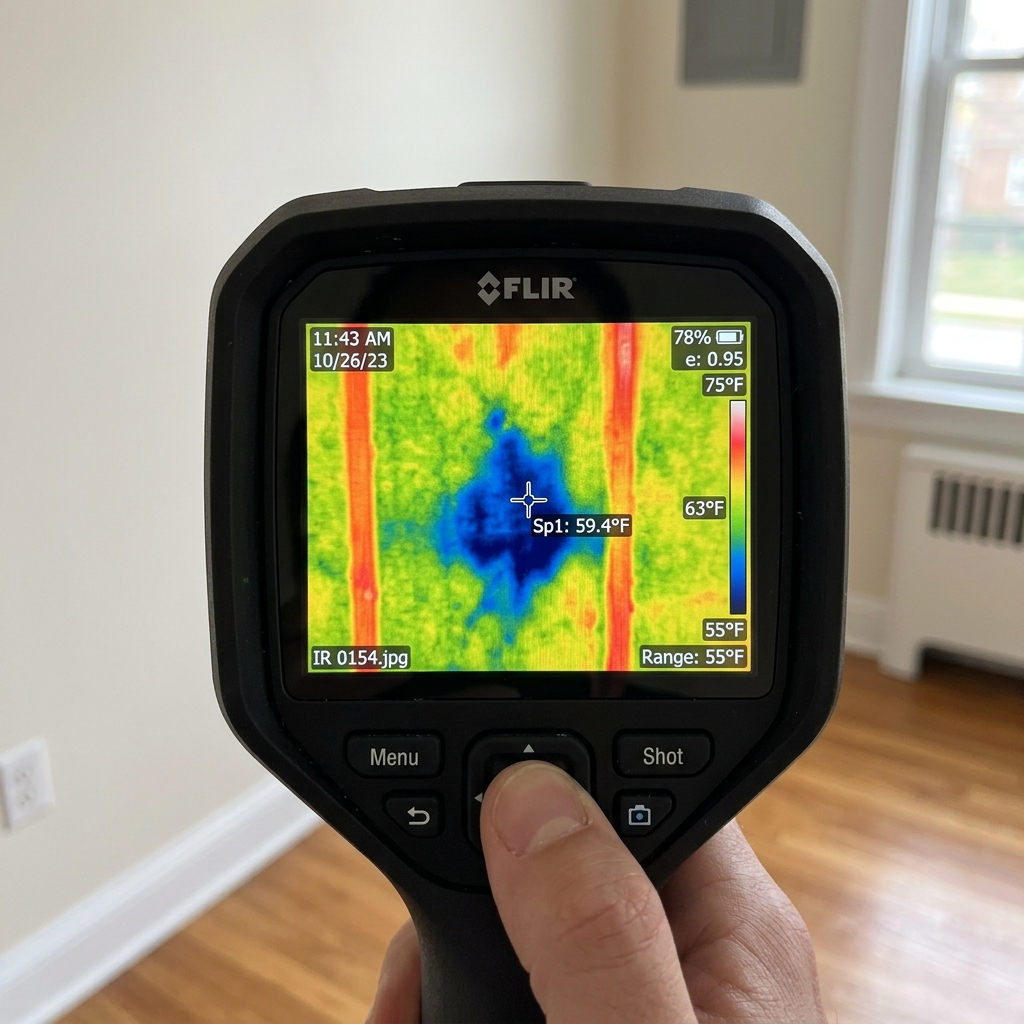
When Repeat Slab Leaks Signal System-Wide Pipe Failure
Experiencing a single slab leak is stressful, but dealing with a second or third leak within a matter of months is a clear indicator that your entire plumbing system has reached the end of its useful lifespan. In Livermore homes built between the 1960s and 1980s, thin-walled Type M copper pipes embedded in the concrete slab deteriorate at roughly the same rate across the entire foundation footprint.
Patching one underground spot while leaving hundreds of feet of corroding copper buried in shifting clay soil creates a cycle of endless repairs, damaged flooring, and skyrocketing insurance premiums. An engineered repiping Livermore project abandons all sub-slab supply pipes completely, reinstalling a clean, reliable plumbing network safely overhead. This permanently resolves issues associated with slab leak repair in Livermore.
Replacing Problematic Piping Materials in Livermore
Different eras of Alameda County residential construction utilized piping materials that are now experiencing widespread failures:
Aging Under-Slab Copper
Decades of mineral friction, velocity abrasion, and local water hardness lead to internal pitting and widespread pinhole leaks beneath concrete foundations.
Polybutylene Replacement Livermore
Homes built between the late 1970s and mid-1990s often contain blue or gray polybutylene tubing, which suffers brittle micro-fractures from municipal chlorine disinfectants.
Galvanized Steel Water Lines
Older mid-century properties with galvanized iron lines suffer internal rust accumulation, producing brown discolored water, restricted flow volume, and catastrophic thread corrosion.
Incompatible Mixed Metals
Unshielded dielectric connections between dissimilar metals create galvanic corrosion that accelerates pipe wall degradation and sudden joint blowouts.
PEX vs. Copper: Selecting the Right Repiping Material
Homeowners have two premium options when replacing their home’s domestic supply network:
- PEX Repipe Livermore (Cross-Linked Polyethylene): PEX-a (Uponor ProPEX) is the industry gold standard for modern repiping. It is completely immune to mineral scale and pitting corrosion, highly flexible for installation behind existing walls with minimal cuts, virtually silent during water flow, and capable of expanding if subjected to freezing without bursting.
- Copper Repipe Livermore (Type L Copper): For homeowners who prefer traditional metal piping, rigid Type L hard-drawn copper offers decades of proven durability, natural antimicrobial resistance, and high structural rigidity. All joints are precision lead-free soldered or press-fitted with commercial fittings.
The Repiping Process: Room-by-Room Order of Work
Our whole-house repiping procedure is organized to keep your home functional throughout the project:
Before work starts, technicians lay heavy neoprene runners along all walkways and construct polyethylene dust containment barriers around active work zones.
New main trunk lines and branch lines are run through attic joists and interior wall cavities. Small rectangular access ports are cut into drywall directly behind fixture supply stops.
Every fixture receives brand-new quarter-turn ball valves and braided stainless steel supply lines, terminating at sinks, showers, toilets, and the water heater manifold.
The system is pressurized and inspected in accordance with City of Livermore building safety standards, confirming zero pressure loss before walls are closed.
All drywall cutouts are patched, taped, mudded, and textured to seamlessly blend back into your original wall surfaces.
For single-line issues rather than full system replacement, check out our slab leak reroute or review our approach to pinhole leak repair.